In many modern homes, family members often retreat to their own separate corners. With personal laptops, smartphones, and individual bedrooms, it’s easy to live under the same roof but feel miles apart. While personal space is important, the decline of shared family time can slowly weaken the bonds that hold a family together. What if the solution wasn't a forced family game night, but something much more subtle? Architects and family psychologists are increasingly pointing to the power of well-designed shared spaces. Creating intentionally cozy and inviting common areas can naturally draw family members together, fostering connection and improving overall family cohesion in a way that feels effortless and authentic.
Why We Drift Apart in Our Own Homes
Before we look at the solution, it helps to understand the problem. The design of many contemporary homes often encourages separation. Think about a typical floor plan: a master suite on one end, kids' bedrooms on the other, a basement rec room for teenagers, and a formal living room that nobody ever uses. Each zone is designed for a specific person or activity, which inadvertently builds invisible walls between family members.
This physical separation is amplified by technology. Everyone has a personal screen that provides a private world of entertainment. When a family member can watch a movie on their tablet in bed, there is less incentive to gather in the living room for a shared movie night. Over time, these small patterns of separation become the norm. Communication becomes more functional (discussing schedules and chores) and less about genuine connection. This is where intentionally creating cozy shared spaces becomes a powerful tool to reverse that trend.
The Psychology of Cozy: How Environment Shapes Interaction
The concept of "coziness" is more than just adding a few throw pillows. In environmental psychology, it's about creating a space that feels safe, comfortable, and restorative. The Danish have a word for this: hygge (pronounced "hoo-ga"), which describes a feeling of contentment and well-being found in simple, soothing environments. When a space feels cozy, it lowers our stress levels and makes us more open to social interaction.
Think about where you're most likely to have a deep conversation. Is it in a brightly lit, formal dining room with stiff chairs, or a softly lit nook with comfortable seating? Cozy environments signal to our brains that it's okay to relax and let our guard down. This creates the perfect setting for spontaneous conversations, shared laughter, and quiet moments of togetherness. By designing a common area with coziness in mind, you are not just decorating; you are engineering an environment that promotes family cohesion.
The "Landing Strip": Your Home's Connection Hub
One of the most effective ways to create a shared space is to design what some designers call a "landing strip." This is a multi-functional area, usually near the main entry or kitchen, that serves as the central hub of the home. It’s a place where family members naturally cross paths as they go about their day. The key is to make this space so inviting that people want to linger.
Instead of just a hallway or a mudroom, a landing strip might include a comfortable bench, a small desk for homework, a charging station for devices, and a shared family calendar. This encourages casual interactions. A parent coming home from work might sit on the bench for a few minutes while a child finishes their drawing at the desk nearby. This small, unplanned moment of shared presence is where connection happens. It turns a transitional space into a relational one.
Anatomy of a Cozy Shared Space: Practical Elements
Creating a cozy shared space doesn’t require a major renovation. It’s about being strategic with furniture, lighting, and textures. Here are the key elements to consider:
1. Clustered and Comfortable Seating
The arrangement of your furniture dictates how people interact. Instead of placing a sofa and chairs against the walls facing a television, try clustering them closer together. Arrange seating in a way that encourages face-to-face conversation. Opt for deep, comfortable sofas, plush armchairs, and plenty of floor cushions or ottomans. The goal is to create a "gravitational pull" where people naturally want to sit down and relax together.
2. Soft and Layered Lighting
Harsh, overhead lighting can feel clinical and unwelcoming. To create a cozy atmosphere, use layered lighting. This means having multiple light sources at different heights. Incorporate floor lamps, table lamps, and even string lights or candles. Use warm-toned bulbs and install dimmer switches so you can adjust the brightness to match the mood. Soft, warm light is calming and makes a space feel more intimate.
3. A Focus on Texture
Texture is a powerful but often overlooked element of design. Incorporating a variety of textures makes a room feel richer and more inviting. Think about adding a chunky knit blanket, a soft shag rug, velvet pillows, or a worn leather armchair. These tactile elements provide physical comfort and add visual warmth, making the space feel like a sanctuary.
4. Designated "Analog" Zones
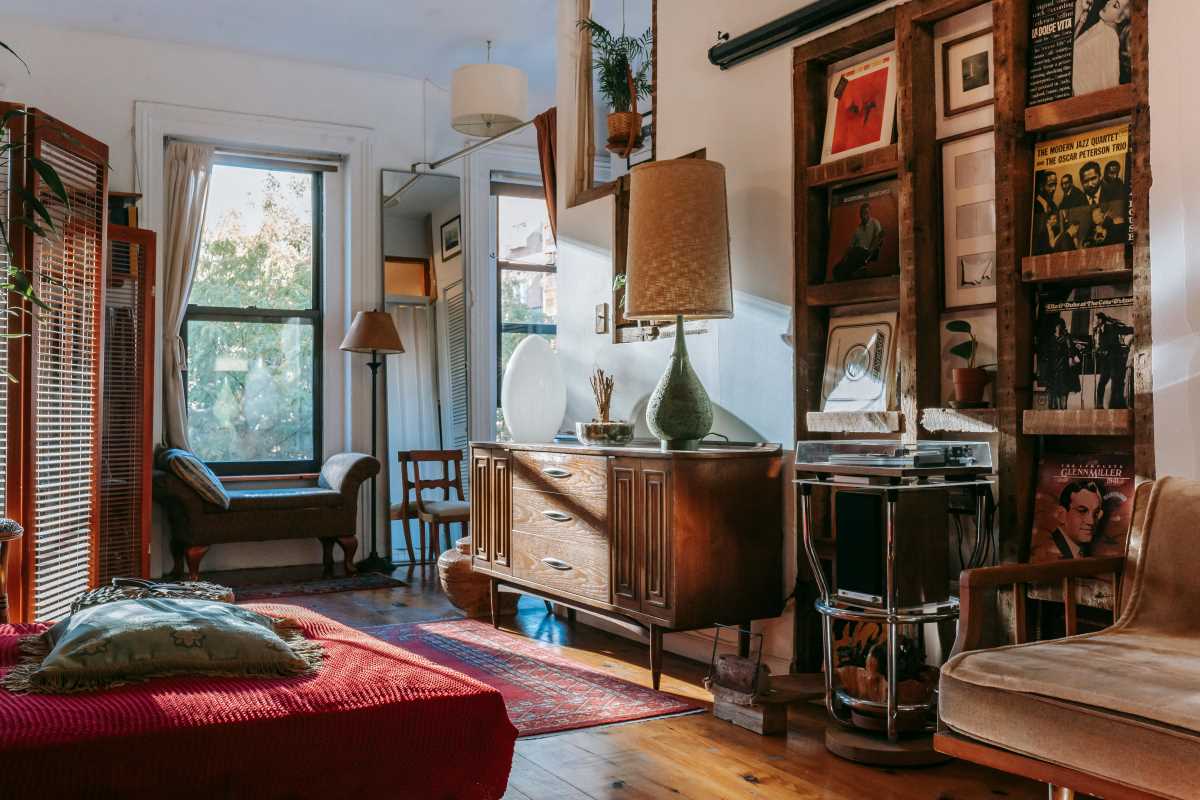
To combat the isolating effects of technology, consider creating a designated analog zone within your shared space. This could be a small corner with a bookshelf full of games and books, an art station with paper and colored pencils, or a record player with a collection of vinyl. Having a tech-free activity readily available provides an easy alternative to scrolling on a phone. It invites family members to engage in a shared, hands-on experience.
Designing for Different Family Dynamics
The perfect shared space will look different for every family. The key is to design it around your unique needs and rhythms.
For families with young children: A cozy shared space might be a corner of the living room dedicated to play. Use soft foam floor tiles, low baskets for easy toy cleanup, and a child-sized table and chairs. By integrating their play area into the main family space, you encourage them to play near you rather than in a separate playroom. This allows for more supervision and more moments of spontaneous interaction.
For families with teenagers: Teenagers crave both independence and connection. A successful shared space for this dynamic might be a "study nook" adjacent to the kitchen. It could have a comfortable desk, good lighting, and access to outlets, but it’s still part of the home's main flow. This allows them to do their own thing while still feeling connected to the family's presence. Adding a snack bar or a mini-fridge can also make the common area a more attractive hangout spot for them and their friends.
For multi-generational families: When multiple generations live under one roof, it’s important to create zones within the shared space. You might have a quiet corner for reading next to a larger area for watching TV or playing games. Using area rugs to define different "zones" can help create a sense of order while still keeping everyone in the same room. Ensure there is a variety of seating options to accommodate different physical needs.